
Can I Keep Honey Bees on Residential Property in El Paso, TX or Las Cruces, NM?
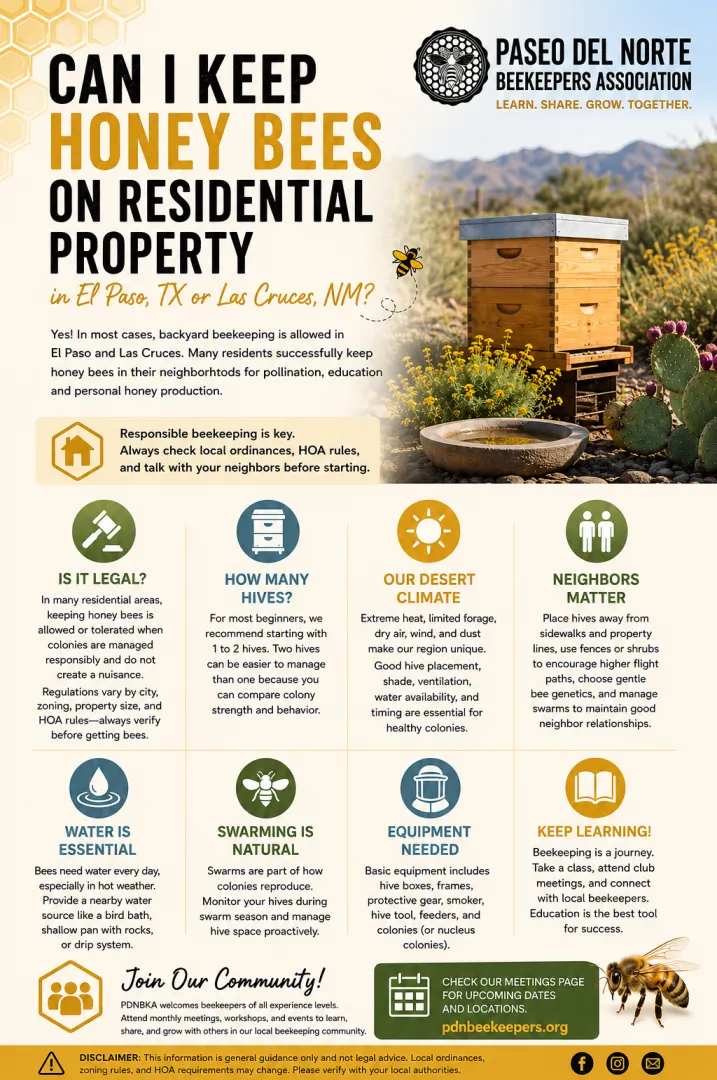
Yes - in most cases, backyard beekeeping is possible in both El Paso, Texas and Las Cruces, New Mexico. Many local residents successfully keep honey bee colonies in residential neighborhoods for pollination, education, and personal honey production.
That said, responsible beekeeping is very important, especially in an urban or suburban environment.
This page is intended as general educational guidance for those interested in keeping bees in our region.
Is Backyard Beekeeping Legal?
In many residential areas, keeping honey bees is allowed or tolerated when colonies are managed responsibly and do not create a nuisance to neighbors.
Regulations can vary depending on city ordinances, HOA restrictions, property size, zoning, number of colonies, hive placement, and visibility.
Before starting, we strongly recommend reviewing local city or county ordinances, checking any HOA restrictions, talking with nearby neighbors, and starting with a small number of colonies.
How Many Hives Should a Beginner Start With?
For most beginners, we generally recommend starting with 1 to 2 hives. Two hives can actually be easier to manage than one because you can compare colony strength and behavior.
Is Beekeeping Difficult in El Paso and Las Cruces?
Beekeeping in the Southwest desert environment is different from many other parts of the country. Our region presents unique challenges including extreme summer heat, dry climate, limited natural forage during parts of the year, water availability, wind, and dust.
Many beekeepers successfully keep healthy colonies in this area, but good hive placement, shade, ventilation, water availability, and timing become very important.
Things to Consider Before Getting Bees
Water Source
Bees need water every day, especially during hot weather. Providing a nearby water source helps prevent bees from searching neighboring yards, pools, or pet bowls. Simple setups include bird baths, shallow pans with rocks or corks, drip systems, or small tubs with floating material for landing.
Neighbor Awareness
Most beekeepers in residential areas try to maintain good relationships with neighbors. Helpful practices include keeping hives away from sidewalks and property lines, using fences or shrubs to encourage higher bee flight paths, avoiding aggressive bee genetics, and managing swarming behavior proactively.
Swarming
Healthy colonies naturally reproduce by swarming. A swarm usually appears as a cluster of bees temporarily gathered on a tree branch, fence, or structure while searching for a new home. Responsible beekeepers monitor colonies during swarm season and manage hive space appropriately.
Bee Temperament
Gentle bee genetics are especially important in residential areas. If a colony becomes overly defensive or aggressive, many beekeepers choose to requeen the hive with calmer genetics.
What Equipment Do I Need?
A basic beginner setup usually includes hive boxes and frames, protective suit or veil, smoker, hive tool, feeders, and bee colonies or nucleus colonies.
There are several different hive styles, including Langstroth hives, top bar hives, Flow Hives, and Layens hives. Most beginners in our area start with Langstroth equipment because of availability and local support.
Should I Take a Beekeeping Course?
Absolutely. Honey bees are livestock, and successful beekeeping requires ongoing learning.
Our club regularly offers Intro to Beekeeping courses, monthly educational meetings, hands-on hive inspections, guest speakers, and community outreach events.
Join the Local Beekeeping Community
The Paseo del Norte Beekeepers Association (PDNBKA) serves beekeepers in El Paso, Las Cruces, Southern New Mexico, and Far West Texas.
We welcome beginners, hobbyists, and experienced beekeepers alike. Our monthly meetings are a great place to ask questions, meet local beekeepers, learn about regional challenges, see equipment and hive setups, and stay informed about upcoming classes and events.
Visit our Meetings page for upcoming meeting dates and locations.
Important Disclaimer
This page is intended for general educational purposes only and should not be considered legal advice. Local ordinances, zoning rules, and HOA requirements may change over time. Please verify any applicable regulations with your local authorities before establishing honey bee colonies on your property.